Geometry-lessons.list — Limited & Popular
PCI Geomatics launches CATALYST - Earth Data, Simplified.

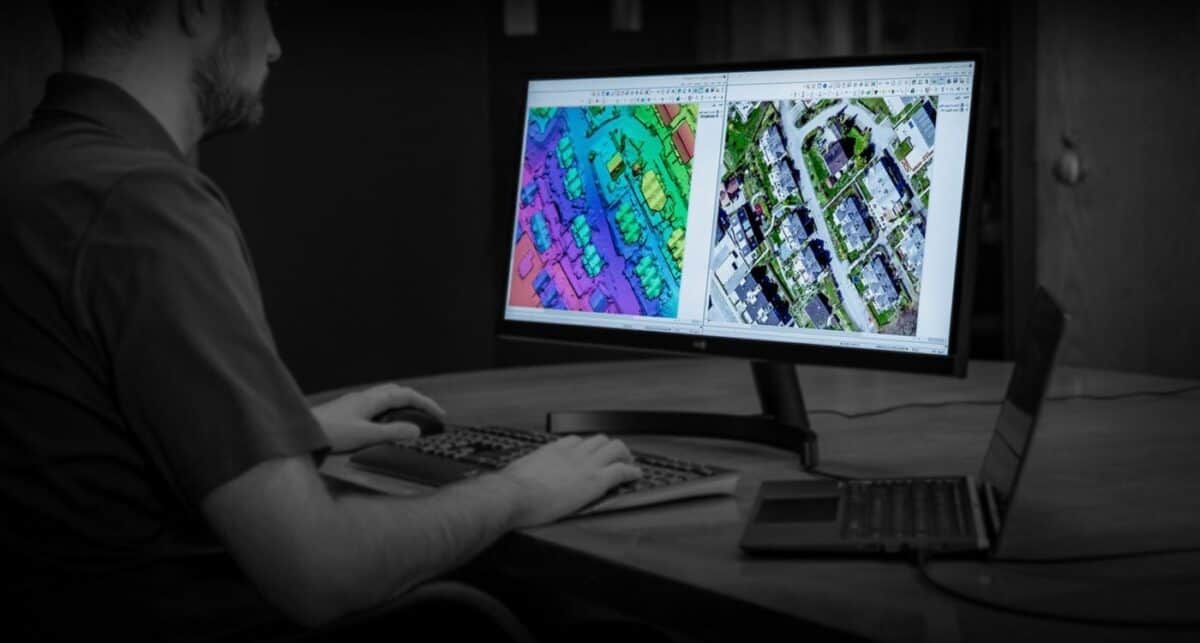
Meet CATALYST

History
We develop complete and integrated software featuring the tools professionals need for remote sensing, digital photogrammetry, image analysis, map production, mosaicking and more. Our strength lies in our uncompromising dedication to being second to none in the imagery processing pillars that are at the foundation of the geospatial world.
Our dedicated staff develops desktop and enterprise software products that allow our customers to produce information from a myriad of aerial and satellite earth observing platforms. Our vision for the future is to make the world a better place by maximizing the value of geo-imagery.

Careers at PCI Geomatics
We offer a dynamic environment where you can use your energy, initiative and talent to build your career while working closely with a group of innovative and highly talented people. Successful candidates will be part of a team that creates, markets, sells, and supports new tools for geo-image processing and automation.
PCI Geomatics offices worldwide
PCI Geomatics Corporate Headquarters
Unit 520
Toronto
Ontario M5H 3L5
Canada
PCI Geomatics National Capital Region Office
Suite 204
Gatineau
Quebec J8Y 3Y7
Canada
PCI Geomatics USA Inc
FL 6 OFC 804
Arlington
Virginia 22209-2281
United States
PCI Geomatics UK
Harwell Space Cluster
Didcot
Oxfordshire OX11 0QR
United Kingdom
A circle is all points equidistant from a center. That definition is perfect and abstract. The drawn circle is always imperfect. The lesson: the ideal exists, but the real is always an approximation. You learn to work with the gap. You learn to say: "Given any finite approximation, there is a more perfect one." That is not failure — that is the engine of precision.
In daily life, we praise convergence. Geometry reminds you that two lines with the same slope, offset but never touching, can be perfectly useful. They define a strip, a corridor, a spacing. Some relationships are not meant to intersect; they are meant to run alongside one another, maintaining a constant distance. That is not coldness — it is stability. geometry-lessons.list
In a right triangle, the square on the hypotenuse equals the sum of the squares on the other two sides. It is not obvious. You have to prove it. The lesson here is that hidden relationships exist between parts that appear independent. The leg and the diagonal are not rivals; they are partners in a quiet equation. Geometry teaches you to look for such invisible balances in every system.
So here is the geometry-lessons.list, not as a table of contents, but as a curriculum of the mind: Place a point. Commit to a line. Respect the parallel. Trust the triangle. Search for hidden squares. Map congruence. Honor similarity. Distinguish area from length. Question your postulates. Live in the locus. Prove in public. Build without measures. And always, always look for the relationship before you reach for the number. A circle is all points equidistant from a center
With only a compass and a straightedge (no ruler marks), you can bisect an angle, draw a perpendicular, construct a regular hexagon. The lesson: you can build rich, exact structures from the simplest tools, as long as you understand the logic of intersection. You do not need a scale to create order — you need the right moves.