Luistertoets Engels Vwo -
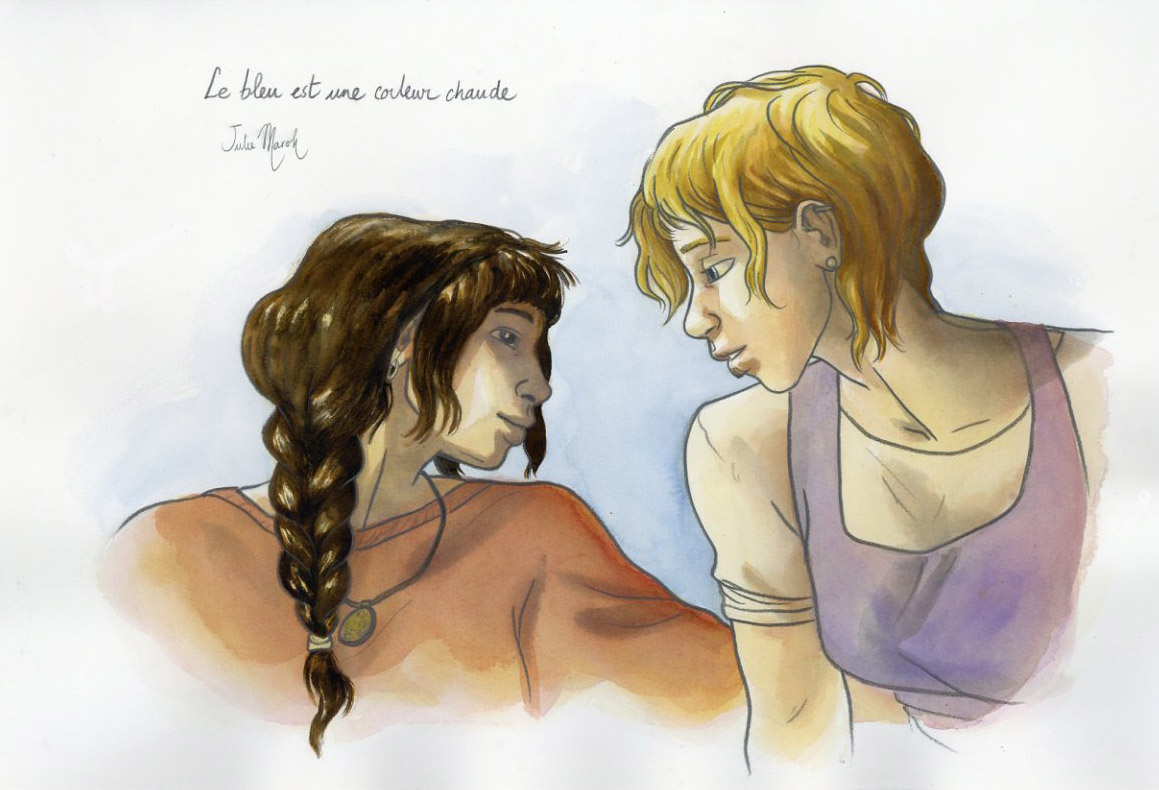
Le Bleu est une couleur chaude, illustration 14
Oeuvre originale.
Artiste : Jul Maroh
Dimensions (cm) : 30x40
Catégorie : Illustrations
Technique : Encre de couleur
Année : 2011
Étiquettes :
430 €
Three weeks later, the real luistertoets came. The first question was a lecture on urban planning—clear, slow. She didn’t relax. Halfway through, the lecturer said: “Now, the main benefit is… no, sorry, let me rephrase. The main benefit is actually reduced emissions, not lower costs.” The question asked: What is the main benefit? Most of her classmates wrote “lower costs.” Lisa wrote “reduced emissions.” She passed with an 8.0.
The test began. The first fragment was a British farmer talking about crop rotation. Clear, slow, easy. Lisa smiled. But question 2 featured an Australian scientist explaining climate data—full of hesitation, false starts, and “um… let’s see.” Question 3: two Scottish students debating university funding, talking over each other. By question 4 (a Canadian news report with background traffic noise), Lisa’s confidence was gone. luistertoets engels vwo
A luistertoets tests not your English level, but your ability to handle real , unpolished speech. Train with distractions, listen for corrections, and never trust the first number or opinion you hear. The answer is often hiding in the speaker’s second thought. Three weeks later, the real luistertoets came
Lisa sighed. “I can’t follow real speech—it’s messy.” Halfway through, the lecturer said: “Now, the main
Her teacher, Mr. Van der Berg, reviewed her results. “Lisa, you understood the main ideas, but you missed the distractors . For example, in the Australian clip, the scientist first mentioned ‘2 degrees warming,’ but then corrected himself to ‘1.5 degrees.’ The question asked for the final figure. You wrote 2.”
Here’s a useful story for VWO students about preparing for an English listening test (luistertoets), with a practical lesson embedded.
Lisa was a VWO 5 student who always did well on English tests—grammar, vocabulary, even writing. But the luistertoets Engels was her nightmare. Every time, she’d freeze. Accents blurred together, speakers talked too fast, and by question 5, she was guessing.
Votre panier est vide.
Three weeks later, the real luistertoets came. The first question was a lecture on urban planning—clear, slow. She didn’t relax. Halfway through, the lecturer said: “Now, the main benefit is… no, sorry, let me rephrase. The main benefit is actually reduced emissions, not lower costs.” The question asked: What is the main benefit? Most of her classmates wrote “lower costs.” Lisa wrote “reduced emissions.” She passed with an 8.0.
The test began. The first fragment was a British farmer talking about crop rotation. Clear, slow, easy. Lisa smiled. But question 2 featured an Australian scientist explaining climate data—full of hesitation, false starts, and “um… let’s see.” Question 3: two Scottish students debating university funding, talking over each other. By question 4 (a Canadian news report with background traffic noise), Lisa’s confidence was gone.
A luistertoets tests not your English level, but your ability to handle real , unpolished speech. Train with distractions, listen for corrections, and never trust the first number or opinion you hear. The answer is often hiding in the speaker’s second thought.
Lisa sighed. “I can’t follow real speech—it’s messy.”
Her teacher, Mr. Van der Berg, reviewed her results. “Lisa, you understood the main ideas, but you missed the distractors . For example, in the Australian clip, the scientist first mentioned ‘2 degrees warming,’ but then corrected himself to ‘1.5 degrees.’ The question asked for the final figure. You wrote 2.”
Here’s a useful story for VWO students about preparing for an English listening test (luistertoets), with a practical lesson embedded.
Lisa was a VWO 5 student who always did well on English tests—grammar, vocabulary, even writing. But the luistertoets Engels was her nightmare. Every time, she’d freeze. Accents blurred together, speakers talked too fast, and by question 5, she was guessing.
Oeuvre originale.
« Des monstres sacrés exposés à la Galerie Glénat. » LE MONDE
« Glénat épate la galerie. » ACTUABD
La galerie Glénat vend des illustrations et des planches originales de bande dessinée, elle expose régulièrement des auteurs confirmés ou des jeunes de grands talents Ignorer