From an , the Neelakurinji flowering season is a masterstroke of biodiversity management. The mass of nectar-rich flowers acts as a magnet for pollinators, including rare butterflies, endemic bees, and the Nilgiri Tahr, which grazes on the plants. This temporary abundance creates a food web frenzy that supports the entire ecosystem. However, this delicate cycle is under severe threat. Habitat loss due to tea and eucalyptus plantations, construction, and invasive alien species like Lantana camara have shrunk the Kurinji’s natural range. Climate change further disrupts the synchrony, as erratic rainfall or temperature shifts can trigger premature flowering or seed failure, potentially breaking the twelve-year rhythm.

The recent bloom of 2018 (the previous major season) and the anticipation for the next in 2030 highlight a . While the blooming season brings a surge of eco-tourism that boosts local economies, unregulated foot traffic can be disastrous. Tourists trampling the fragile blooms, plucking flowers, or leaving behind waste directly reduce seed set for the next cycle. Consequently, conservationists now advocate for "regulated viewing"—designated paths, timed entry, and strict codes of conduct—so that the very wonder that draws people to the hills does not lead to the flower’s extinction.

Historically, the blooming season has served as a for the indigenous communities of the Western Ghats, particularly the Muthuvan and Paliyan tribes. For these tribes, living in dense forests without modern calendars, the Neelakurinji was nature’s timekeeper. They used the twelve-year cycle to track their age, plan tribal gatherings, and manage honey collection (as the blooms attract massive swarms of bees). The flower is so deeply embedded in local heritage that the classical Tamil literary work Kurinjipaattu (The Song of the Mountain) dedicates an entire chapter to the landscape and love associated with this flower, treating its rare bloom as an event of cosmic significance.

In the Western Ghats of India, a silent, natural clock ticks for twelve long years. When its alarm finally rings, it does not produce a sound but a spectacular vision: entire mountain slopes, from the Munnar hills in Kerala to the grasslands of the Nilgiris, transform into a rolling carpet of vibrant violet-blue. This rare phenomenon is the mass blooming of Strobilanthes kunthiana , popularly known as the Neelakurinji flower. Its flowering season is not merely a tourist attraction; it is a profound lesson in patience, ecological precision, and the fragile beauty of life.

In conclusion, the Neelakurinji flowering season is far more than a floral spectacle. It is a biological clock, a cultural compass, and an ecological event that binds the rhythm of the land to the lives of its people. Its twelve-year silence followed by a brief, explosive bloom reminds us of a fundamental truth: the most extraordinary things in nature are not always abundant or annual, but rare, patient, and all the more precious because of it. To witness a Neelakurinji bloom is to witness time itself painted in shades of blue—a fleeting, once-in-a-generation promise that the mountains will one day sing in violet again.

The most striking characteristic of the Neelakurinji flowering season is its . Unlike most plants that bloom annually, the Neelakurinji follows a unique survival strategy called gregarious flowering followed by mass seeding and death. The plant takes over a decade—specifically twelve years in the case of the most famous species in Munnar—to mature. For eleven years, it remains a nondescript shrub blending into the shola grasslands. But in its twelfth year, almost as if governed by a synchronized internal calendar, every plant within a vast region flowers simultaneously, creating the famous "blue mountains" ( neelam means blue, kurinji means flower). Shortly after setting seeds, the mother plant dies, completing a remarkable cycle that ensures the next generation's survival by overwhelming seed predators with sheer quantity.

How It Works ⚙️

Simple, intuitive design tools at your fingertips

Neelakurinji Flowering Season __link__ Here

From an , the Neelakurinji flowering season is a masterstroke of biodiversity management. The mass of nectar-rich flowers acts as a magnet for pollinators, including rare butterflies, endemic bees, and the Nilgiri Tahr, which grazes on the plants. This temporary abundance creates a food web frenzy that supports the entire ecosystem. However, this delicate cycle is under severe threat. Habitat loss due to tea and eucalyptus plantations, construction, and invasive alien species like Lantana camara have shrunk the Kurinji’s natural range. Climate change further disrupts the synchrony, as erratic rainfall or temperature shifts can trigger premature flowering or seed failure, potentially breaking the twelve-year rhythm.

The recent bloom of 2018 (the previous major season) and the anticipation for the next in 2030 highlight a . While the blooming season brings a surge of eco-tourism that boosts local economies, unregulated foot traffic can be disastrous. Tourists trampling the fragile blooms, plucking flowers, or leaving behind waste directly reduce seed set for the next cycle. Consequently, conservationists now advocate for "regulated viewing"—designated paths, timed entry, and strict codes of conduct—so that the very wonder that draws people to the hills does not lead to the flower’s extinction. neelakurinji flowering season

Historically, the blooming season has served as a for the indigenous communities of the Western Ghats, particularly the Muthuvan and Paliyan tribes. For these tribes, living in dense forests without modern calendars, the Neelakurinji was nature’s timekeeper. They used the twelve-year cycle to track their age, plan tribal gatherings, and manage honey collection (as the blooms attract massive swarms of bees). The flower is so deeply embedded in local heritage that the classical Tamil literary work Kurinjipaattu (The Song of the Mountain) dedicates an entire chapter to the landscape and love associated with this flower, treating its rare bloom as an event of cosmic significance. From an , the Neelakurinji flowering season is

In the Western Ghats of India, a silent, natural clock ticks for twelve long years. When its alarm finally rings, it does not produce a sound but a spectacular vision: entire mountain slopes, from the Munnar hills in Kerala to the grasslands of the Nilgiris, transform into a rolling carpet of vibrant violet-blue. This rare phenomenon is the mass blooming of Strobilanthes kunthiana , popularly known as the Neelakurinji flower. Its flowering season is not merely a tourist attraction; it is a profound lesson in patience, ecological precision, and the fragile beauty of life. However, this delicate cycle is under severe threat

In conclusion, the Neelakurinji flowering season is far more than a floral spectacle. It is a biological clock, a cultural compass, and an ecological event that binds the rhythm of the land to the lives of its people. Its twelve-year silence followed by a brief, explosive bloom reminds us of a fundamental truth: the most extraordinary things in nature are not always abundant or annual, but rare, patient, and all the more precious because of it. To witness a Neelakurinji bloom is to witness time itself painted in shades of blue—a fleeting, once-in-a-generation promise that the mountains will one day sing in violet again.

The most striking characteristic of the Neelakurinji flowering season is its . Unlike most plants that bloom annually, the Neelakurinji follows a unique survival strategy called gregarious flowering followed by mass seeding and death. The plant takes over a decade—specifically twelve years in the case of the most famous species in Munnar—to mature. For eleven years, it remains a nondescript shrub blending into the shola grasslands. But in its twelfth year, almost as if governed by a synchronized internal calendar, every plant within a vast region flowers simultaneously, creating the famous "blue mountains" ( neelam means blue, kurinji means flower). Shortly after setting seeds, the mother plant dies, completing a remarkable cycle that ensures the next generation's survival by overwhelming seed predators with sheer quantity.
2

Activate the Tool

Click on the extension icon and select the tool you need, or use the right-click context menu.

Extension dropdown menu with tool options
3

Use with Precision

Interact with the webpage to measure elements, identify fonts, or pick colors with pixel-perfect accuracy.

Measurement tool in action on a webpage

Installation Guide 💻

Install Web Design Ruler from official stores or as an unpacked extension

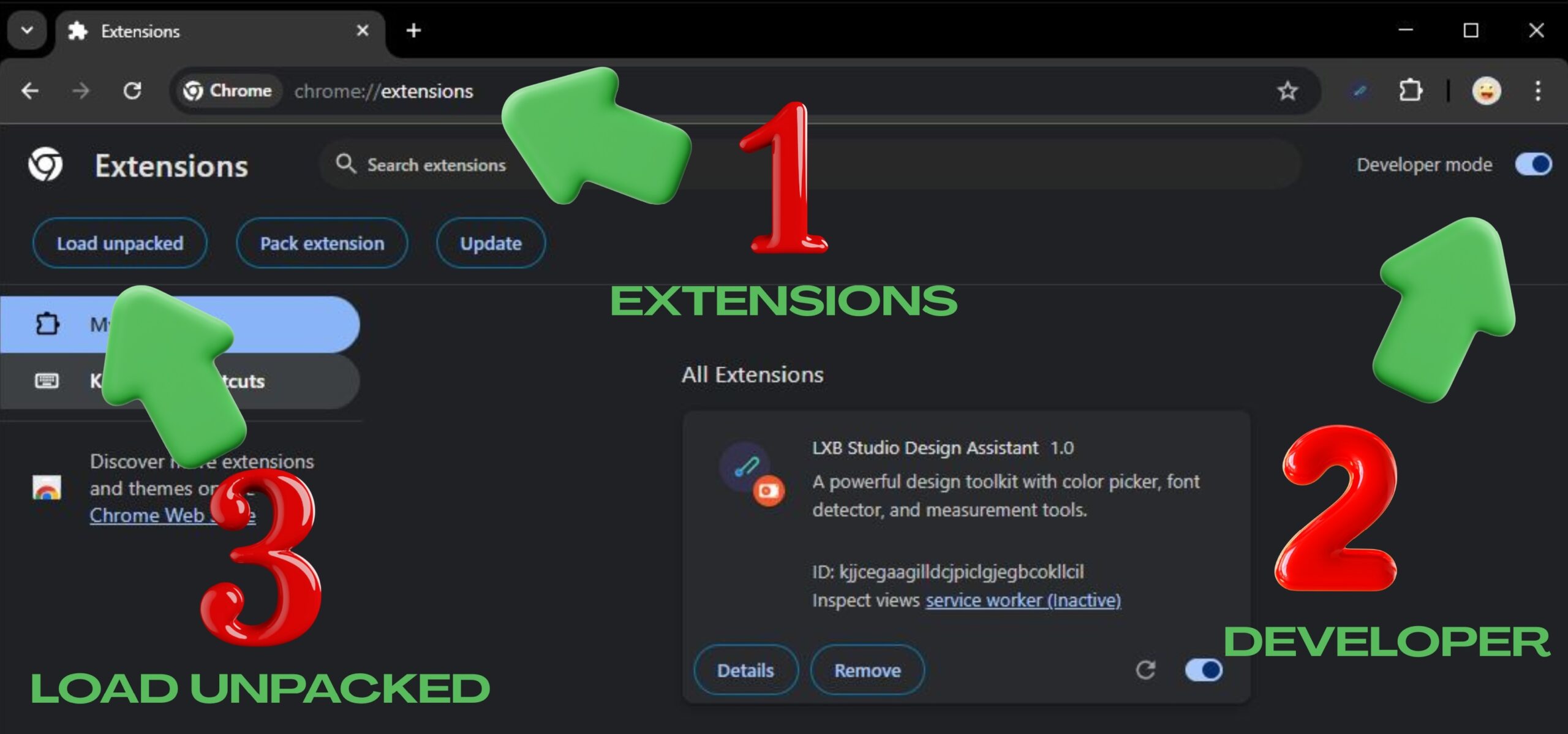
Chrome extensions page showing load unpacked process

Install from Official Stores (Best)

For Chrome: Visit the Chrome Web Store and click "Add to Chrome". For Firefox: Visit Firefox Add-ons and click "Add to Firefox".

Or Download Extension Files

Download the Web Design Ruler extension files from this website. Save the ZIP file to your computer and extract it.

Open Extensions Page

For Chrome: Type chrome://extensions in the address bar. For Firefox: Type about:addons in the address bar.

Enable Developer Mode (Chrome Only)

Toggle on the "Developer mode" switch in the top-right corner of the Extensions page.

Load Unpacked Extension

Click the "Load unpacked" button and navigate to the folder where you extracted the extension files. Select the folder and click "Select Folder".

⚠️ Important Warning for Manual Installation

Do not delete or move the extension folder after installation. Since this is an unpacked extension, Chrome needs the folder to remain in its original location. If you delete or move the folder, the extension will stop working.

Privacy & Security 🔒

Your privacy and security are our top priorities

No Data Collection

Web Design Ruler operates entirely on your device. We don't collect, store, or transmit any of your data or browsing history to our servers or third parties.

Limited Permissions

Our extension only requests the minimum permissions needed to function. We can only access the active tab when you explicitly activate one of our tools.

Clean Code

No ads, no trackers, no bloat. The extension is built with clean, efficient code focused solely on providing helpful design tools.

Open

The extension is built with transparent practices. You can inspect the code yourself since it's installed as an unpacked extension.

Malware-Free

Our extension contains no malware or harmful code. It's a simple, focused tool created by designers for designers at LXB Studio.

Works Offline

All functionality works completely offline. No internet connection is required for the tools to operate after installation.

Why We Built This 💡

As web designers and developers at LXB Studio, we often found ourselves switching between multiple tools to measure elements, identify fonts, and pick colors from websites. This workflow was inefficient and interrupted our creative process.

We built Web Design Ruler to solve these pain points and create a streamlined workflow for ourselves and the design community.

  • Eliminate the need for multiple extensions.
  • Create pixel-perfect designs with accurate measurements.
  • Identify and replicate beautiful typography.
  • Extract exact colors for design consistency.
  • Speed up the web design process.

We've made it free and open because we believe in giving back to the design community that has given us so much.

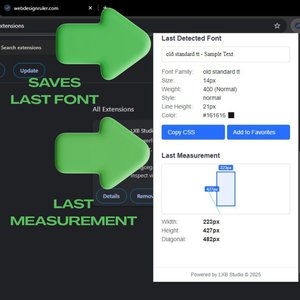
Web Design Ruler extension popup interface

Frequently Asked Questions ❓

Got questions? We've got answers

Which browsers are supported?

Web Design Ruler works with Google Chrome, Firefox, and Chromium-based browsers like Microsoft Edge, Brave, Opera, and Vivaldi. Install from the Chrome Web Store, Firefox Add-ons, or download the extension files directly.

Is Web Design Ruler free to use?

Yes! Web Design Ruler is completely free to use. We created it to simplify web design workflows and give back to the design community.

Can I use the extension on any website?

Yes, you can use Web Design Ruler on any website. However, it cannot be used on browser pages like the Chrome Web Store, Settings, or New Tab page due to Chrome's security restrictions.

Why is it distributed as an unpacked extension?

We offer both options! You can install from official stores (Chrome Web Store and Firefox Add-ons) or download it as an unpacked extension for those who prefer manual installation or want to inspect the code.

Why can't I delete the extension folder?

Chrome loads unpacked extensions directly from the folder location you specify during installation. If you delete or move this folder, Chrome can no longer find the extension files, and it will stop working. This is different from extensions installed from the Chrome Web Store, which are stored in Chrome's internal storage.

How accurate are the measurements?

The measurement tool provides pixel-perfect accuracy based on the rendered elements in the browser. It measures exactly what you see on screen.

Can it identify all fonts?

The font detector can identify any font that's actively loaded and applied to text on the webpage. It cannot identify fonts in images or custom fonts that use non-standard loading methods.

How do I report bugs or request features?

We welcome your feedback! Please contact us through our contact page to report bugs or suggest new features.

Ready to Design with Precision? 🚀

Download Web Design Ruler today and transform your web design workflow with powerful measurement, font identification, and color picking tools.

Get Started Now