-






 i - BILLING MASTERInstant Customer SupportReliable Biz AnalyticsRevolutionary Business Analysis Software


For developers outside of the Sage, Salesforce, or ERP ecosystems, "SData" (Spec-driven Data) might sound like a dusty relic. But for those who manage fleets of technicians, inventory, and complex customer schedules, the SData tool isn't just a connector—it is the plumbing of modern commerce. Before we talk about the tool, let's define the protocol. SData is an open protocol based on REST, AtomPub, and standard HTTP verbs. Unlike generic REST APIs, which often require custom endpoints for every unique query, SData uses a spec-driven URL schema .
An SData URL looks like this: https://company.sdata.com/sdata/myApp/-/salesOrders('SO123')/items
Think of it like this: REST asks, “What endpoint do you want?” SData asks, “ Which table, which rows, and which schema version? ”
When the technician’s van app syncs two minutes later, the tool requests /sdata/crm/jobs?$syncDigest=2023-10-27T15:30:00Z . The server replies: "Job 456 changed." The tool fetches just that one record. The technician sees the change instantly, using 1kb of data instead of 5mb. Critics argue that SData is "too verbose" (Atom/XML heavy) and that its query syntax is proprietary. They are right—if you are building a public API for a mobile app with five tables.
That string is profoundly powerful. It tells the SData tool exactly which contract (myApp), which resource (salesOrders), which key (SO123), and which sub-resource (items) to fetch—without writing a single line of backend code. The "SData Tool" refers to a class of client libraries, debugging proxies, and data mappers (often found in .NET, Java, or JavaScript) designed to interact with SData endpoints. The most famous implementations are the Sage SData libraries and the Salesforce Connect adapters .
It doesn't try to solve every problem. It solves the problem:

Instant Voice and Online Support to resolve the issues & doubts in the software.

Can be learned in just 20 minutes training even if you are unaware of using computer.

Simplifies complex billing and related business processes with utmost easiness.

Graphical & Analytical reports for better business improvement plans.
We develop customized solutions for your Business after analysing your business operations and ensure excellent business flow.

Easy ERP

Simple Billing

Accurate Reports

Smart Operations
For developers outside of the Sage, Salesforce, or ERP ecosystems, "SData" (Spec-driven Data) might sound like a dusty relic. But for those who manage fleets of technicians, inventory, and complex customer schedules, the SData tool isn't just a connector—it is the plumbing of modern commerce. Before we talk about the tool, let's define the protocol. SData is an open protocol based on REST, AtomPub, and standard HTTP verbs. Unlike generic REST APIs, which often require custom endpoints for every unique query, SData uses a spec-driven URL schema .
An SData URL looks like this: https://company.sdata.com/sdata/myApp/-/salesOrders('SO123')/items
Think of it like this: REST asks, “What endpoint do you want?” SData asks, “ Which table, which rows, and which schema version? ”
When the technician’s van app syncs two minutes later, the tool requests /sdata/crm/jobs?$syncDigest=2023-10-27T15:30:00Z . The server replies: "Job 456 changed." The tool fetches just that one record. The technician sees the change instantly, using 1kb of data instead of 5mb. Critics argue that SData is "too verbose" (Atom/XML heavy) and that its query syntax is proprietary. They are right—if you are building a public API for a mobile app with five tables.
That string is profoundly powerful. It tells the SData tool exactly which contract (myApp), which resource (salesOrders), which key (SO123), and which sub-resource (items) to fetch—without writing a single line of backend code. The "SData Tool" refers to a class of client libraries, debugging proxies, and data mappers (often found in .NET, Java, or JavaScript) designed to interact with SData endpoints. The most famous implementations are the Sage SData libraries and the Salesforce Connect adapters .
It doesn't try to solve every problem. It solves the problem:
i-Billing Master is the complete GST Enabled Billing solution for all type of industries. For experiencing the ultimate hassle-free billing process, try the Free Demo Installation of i-Billing Master!!
Call 7558888855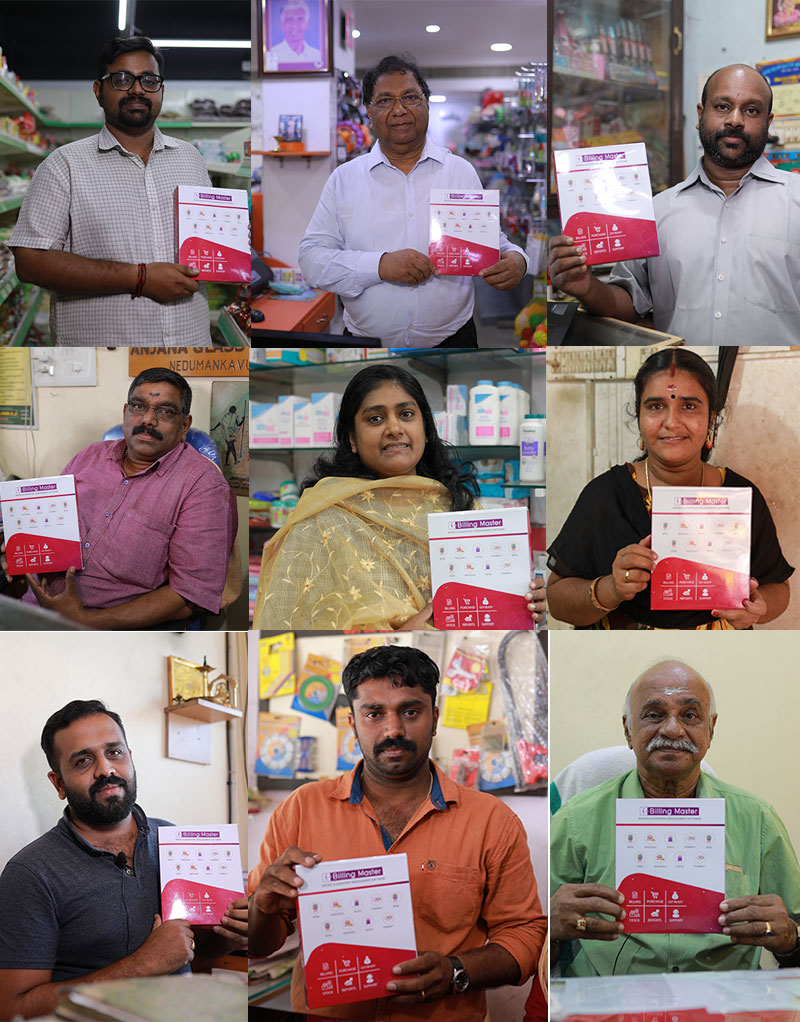










i-Billing Master Free Demo
Do your business operation is complicated with large volume of Inventory and product life cycle lies over production units, stockists and multiple stores? i-Billing Master allows complete control on your entangled business operation.
Inspironz IT Solutions, 11/948, 2nd Floor Kochumelathil Building, Arumurikkada, Kollam, Kerala, India.
+91 755 888 8855 / +91 755 888 855